
Our Signature
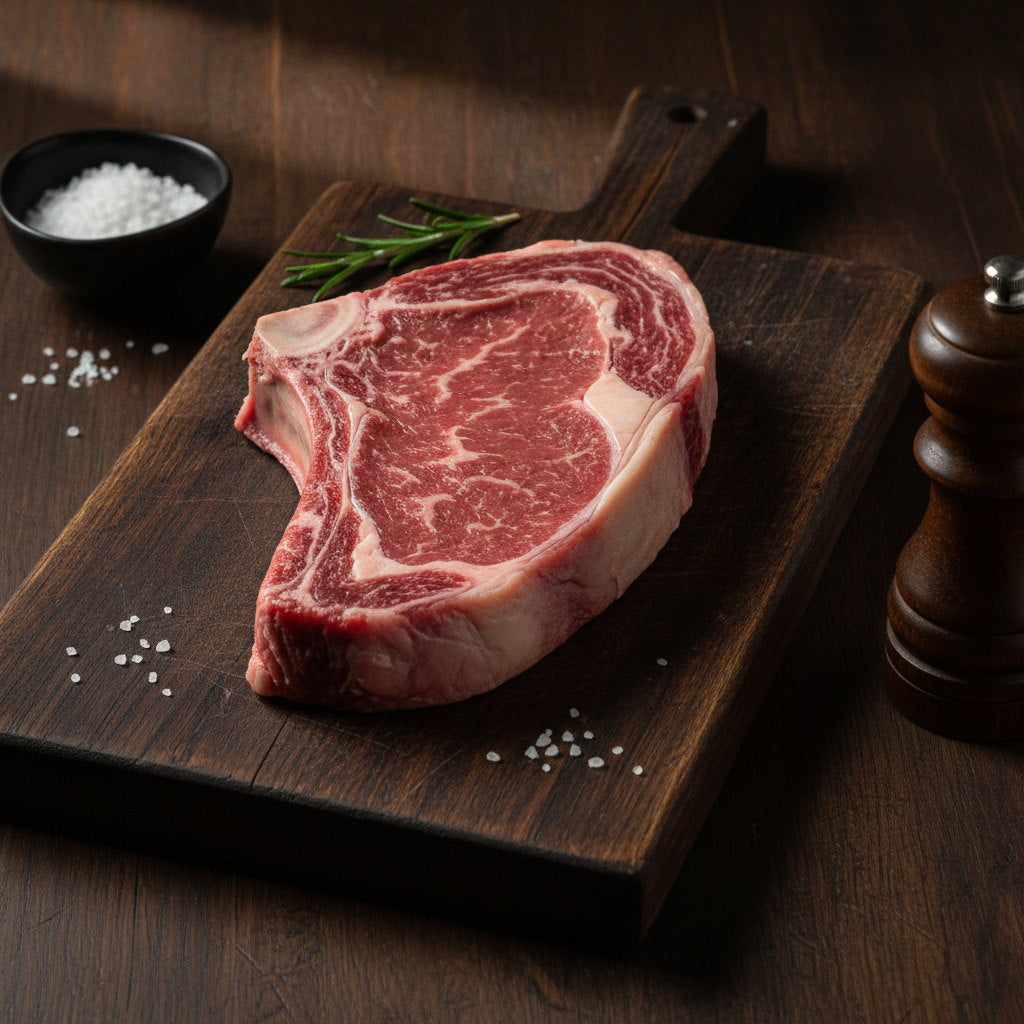
The fat is golden. That's not a flaw. That's the receipt.
Real grass-finished beef, raised on open pasture at Mount Pleasant Beef. The color you see is the diet you can trust.
Our Signature
Gold is what real grass tastes like.
Cut into most supermarket beef and the fat is bright, uniform white. It looks "clean." It's actually a tell — a sign the animal spent its final months at a feedlot eating grain, not grass.
Our beef is different, and you can see it before you taste it. Our fat carries a golden hue, because our cattle eat what cattle are built to eat: living, green forage, every day of their lives, right up to the end. That grass is dense with carotenoids — the same natural pigments that make carrots orange and egg yolks deep yellow. A grass-finished animal stores them in its fat. A grain-finished animal never can.
So when you see the gold, you're seeing the truth of how the animal was raised. It's the one thing a label can't fake and a feedlot can't produce.
We're proud of it. We put it on the front of the package. We call it our Signature Golden Fat — and once you know what it means, you'll never look at white fat the same way again.
Why our fat is golden
Short answer: because it's real.
Longer answer below.
It starts with the grass.
Fresh pasture is full of carotenoids and other fat-soluble compounds. When cattle graze green forage — not grain, not silage-heavy rations — those compounds move into the animal's fat and give it a golden color.
Grain can't do this.
Feedlot cattle are finished on corn and grain to fatten them fast. Grain doesn't carry the same pigments, so the fat comes out white. This is why so much "grass-fed" beef in the store still has snow-white fat: the animal was started on grass and finished on grain. We never finish on grain. Not once.
That's the whole point of "grass-finished."
"Grass-fed" is easy to claim, because nearly every calf starts on grass and its mother's milk. What separates real pasture beef is how the animal finishes — its last several months, when most of the fat and flavor are laid down. We finish on grass. The gold in the fat is the proof.
The color tells a story about our land, too.
Our fat runs deeper gold in spring and early summer, when the pasture is at its most vibrant, and a shade paler in the colder months. That's not inconsistency — that's your beef changing with the seasons, the way real food from a real place should.
The one claim we can't fake
You can print "grass-fed" on anything. You can't turn feedlot fat gold. The color is the honesty.
A taste of the season
Beef with a sense of place.
Wine has terroir — the idea that the land, the weather, and the season live inside the final product. So does honestly raised beef.
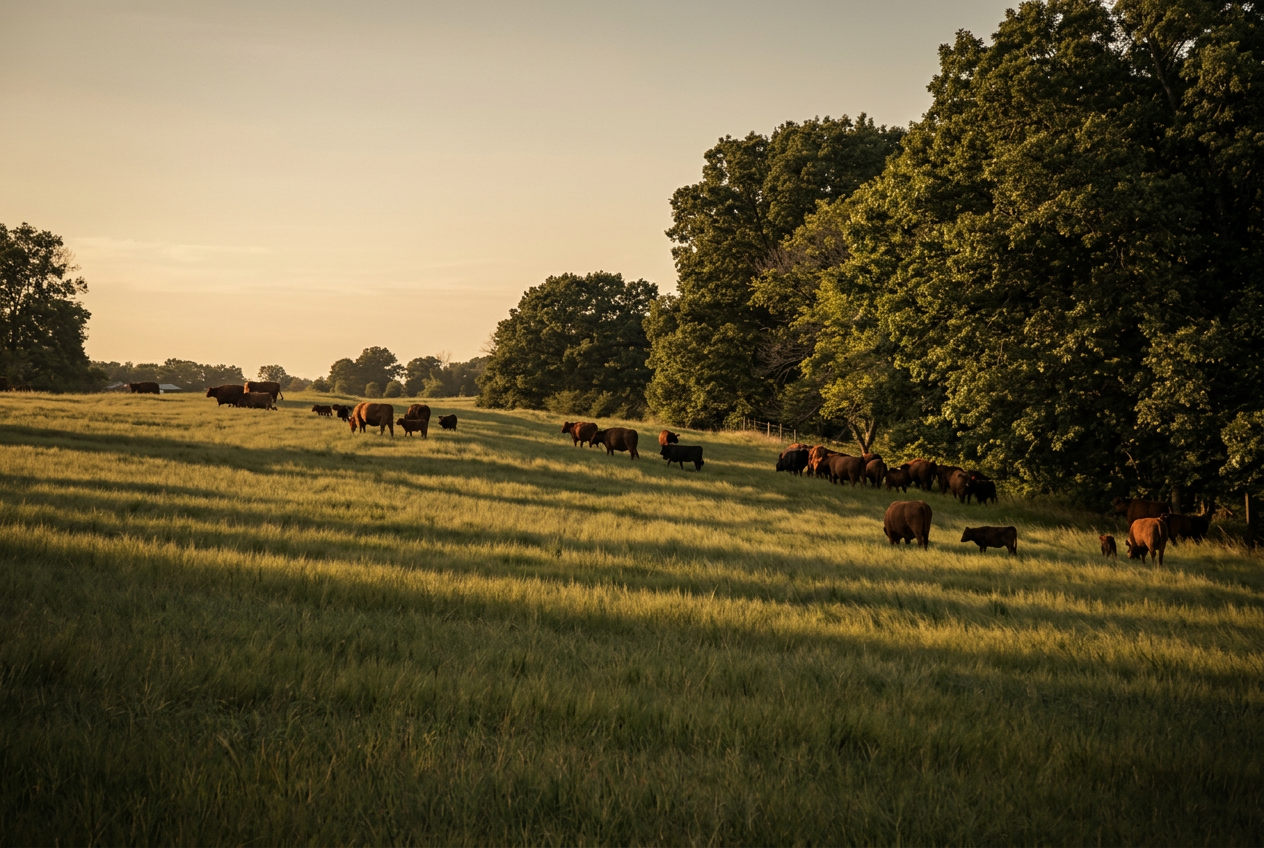
Our cattle graze Northeast Texas pastures through the turning year, and the beef reflects it. The forage they eat in the flush of spring is different from late-summer growth or winter stockpile, and that variation shows up in the depth of the gold and the character of the flavor. Every batch is a snapshot of our land at a moment in time.
A feedlot's job is to erase that — same grain, same result, all year, everywhere. Ours is to protect it. When your beef looks a little different from one season to the next, that's the land talking.
What's in the gold
The color comes with the goods.
The carotenoids that give our fat its golden color are the same family of compounds your body uses to make vitamin A. And grass-finishing is associated with a naturally different nutritional profile than grain-finished beef — including carotenoids like beta-carotene, vitamin E, conjugated linoleic acid (CLA), and a more favorable omega-3 to omega-6 balance.
In other words: the gold isn't just beautiful. It's a visible marker of the forage-based diet that shapes what's actually in your beef.
We share this as general information about grass-finished beef, not as medical or dietary advice. Nutrient levels vary by animal, season, and forage.
Frequently asked
The golden fat, answered.
Why is the fat on my beef yellow instead of white?
That golden color is a good thing — it's the signature of a truly grass-finished animal. Fresh pasture is rich in natural pigments called carotenoids, which the animal stores in its fat. Grain-finished cattle produce white fat because grain doesn't carry those compounds. If your beef's fat is gold, it means the animal really did eat grass its whole life.
Is golden fat safe? It looks different from what I'm used to.
Completely safe, and completely natural. It looks different from supermarket beef because supermarket beef is usually grain-finished. Golden fat is what beef looked like before feedlots became the norm.
Why does the color change from one order to the next?
Because your beef follows the seasons. Spring and summer pasture makes the fat more vividly gold; winter forage makes it a bit paler. It's a feature of real, single-source beef — not a defect.
Does "grass-fed" mean the same thing as what you do?
Not always. Most beef labeled "grass-fed" is finished on grain in its final months. We finish on grass — the harder, slower way — and the golden fat is the proof.
Own the gold
We could hide it. We decided to own it.
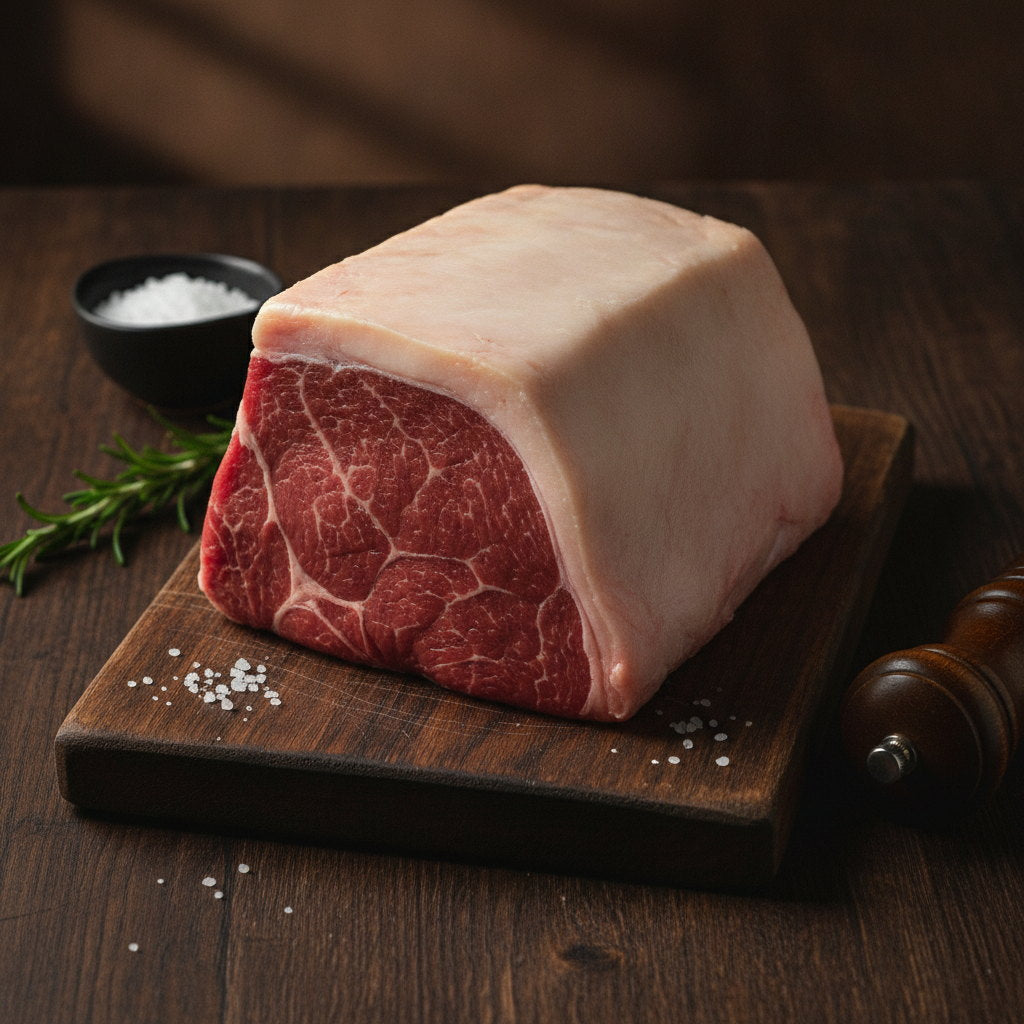
For decades, the beef industry trained people to see white fat as "premium" — because white fat is what feedlots produce, and feedlots produce most of America's beef. We do it the older, harder way: cattle on grass, on our land, from birth through finish.
The gold in our fat is the difference, made visible. We're not going to apologize for it or breed it out to match the supermarket. We're going to put it on the front of the box.
Welcome to Mount Pleasant Beef. Own the gold.